
Fitness & Athletics
Train the body to protect the brain.
Thoryn tests the science on himself — training, altitude, and recovery all show up in focus, mood, and resilience.
Based in Aspen, Colorado, Thoryn races triathlon year-round and skis 100+ days a season. Aerobic capacity, strength, and sleep are the most reliable levers on brain health — so every training decision is made with that in mind.
How this feeds BRAIN.ONE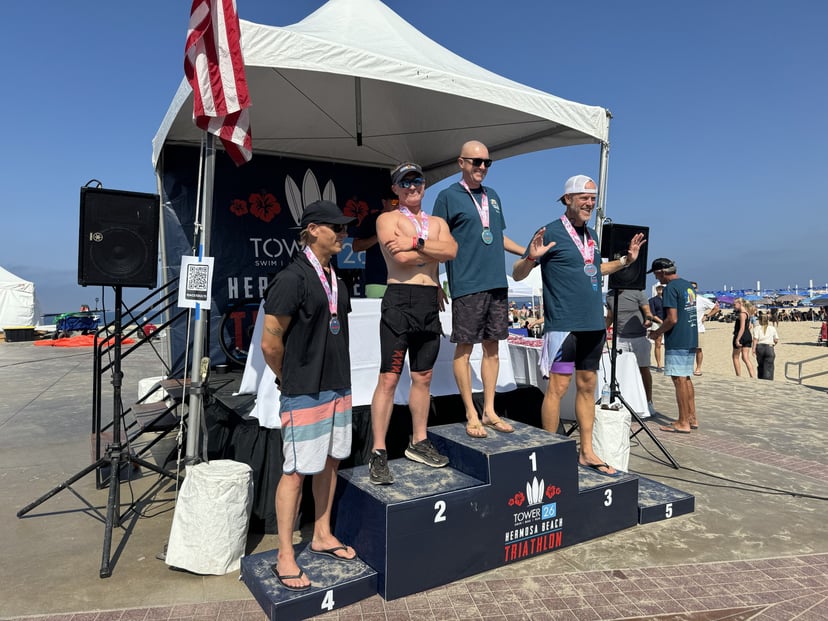
The training stack
Triathlon
Swim, bike, run — the sport that rewards consistency over heroics. Structured blocks, zone-2 volume, and threshold work built around recovery rather than in spite of it.
Ski & mountain
100+ days a season on Aspen snow, plus skinning and altitude work. The mountain doubles as the training environment and the reason for training.
Strength & durability
Heavy compound lifting and single-leg work to protect joints, bone density, and the ability to keep doing all of the above for decades.
Recovery
Sleep first, then breathwork, sauna and cold, and deliberate deload weeks. Recovery is the training stimulus that actually gets absorbed.
Race achievements
A running record of races, podiums, and results.
- 2024
Hermosa Beach Triathlon
PodiumTower 26 Hermosa Beach Triathlon — age-group podium finish on an ocean swim, flat coastal bike, and beachfront run.
- Ongoing
Aspen season — 100+ ski days
A full winter of altitude volume on Aspen snow, treated as the aerobic base block for the race season that follows.
- Ongoing
Olympic & sprint distance racing
A rolling schedule of sprint and Olympic distance triathlons used to test training blocks against the clock.
What gets measured
HRV & RHR
Daily readiness signal, trended not spot-checked
Sleep architecture
Deep and REM as the recovery ledger
VO₂ max
The strongest single marker of healthspan